Everyone Predicts the Market. We Publish Every Result.
Lesson · Signals & data · October 7, 2026
Olympia publishes educational content for learning purposes only. Past performance is not indicative of future results. Nothing here is investment advice.
Paper trading, stock scanners, and the one decision that comes before any of it: discipline over prediction. You can't see every punch coming, but you can decide how many you'll take and which ones you block. Two signals off the same board — one paid in eight trading days, one never did — and the plan was the difference.
The lesson in writing
What you need is discipline over prediction. You can't see every punch coming, but you can decide how many you're going to take and which ones you can block.
Stop betting on being right and decide what you'll do if you're not. People don't learn from victory. They learn from defeat. They learn from their mistakes.
What it is
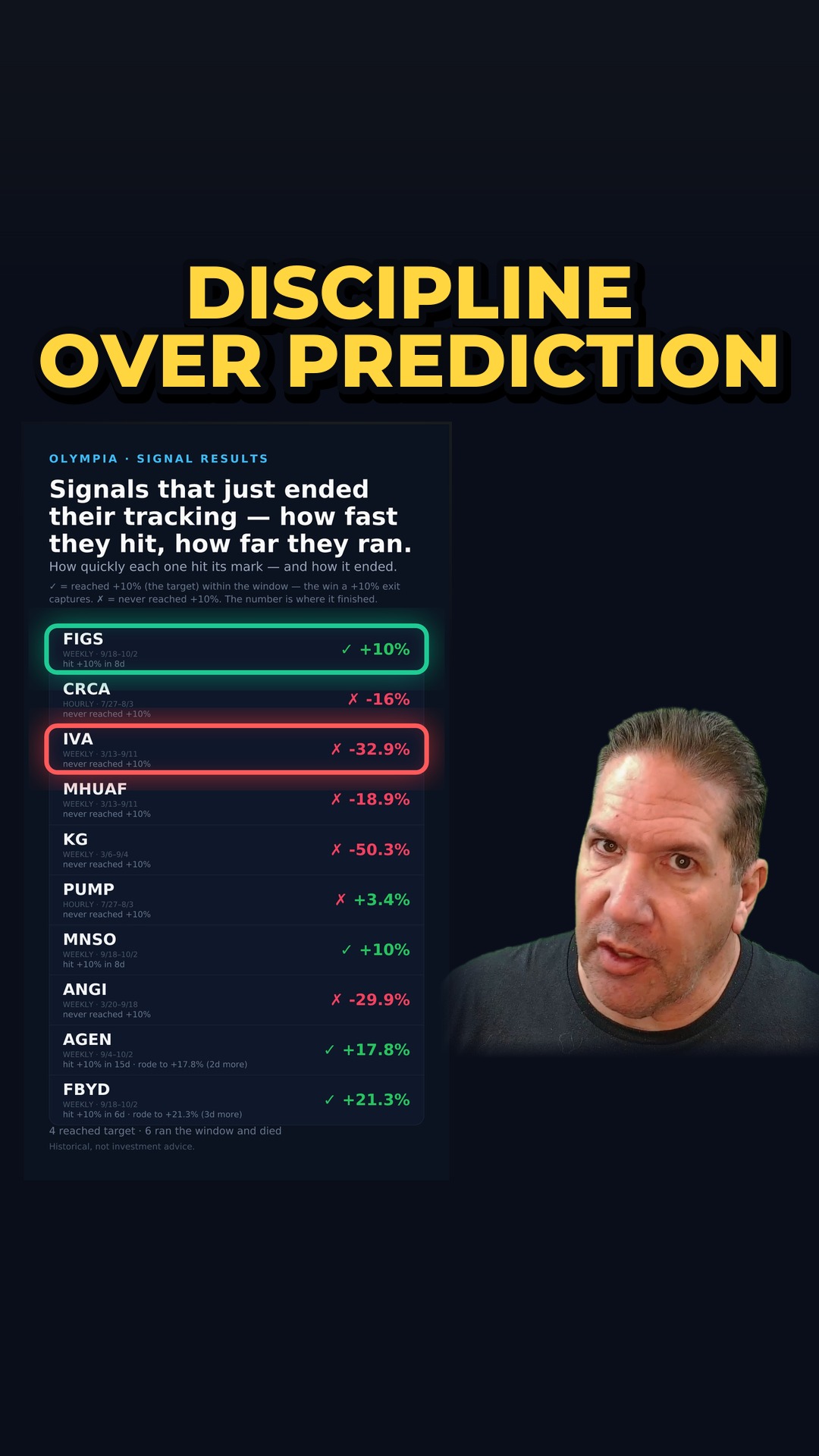
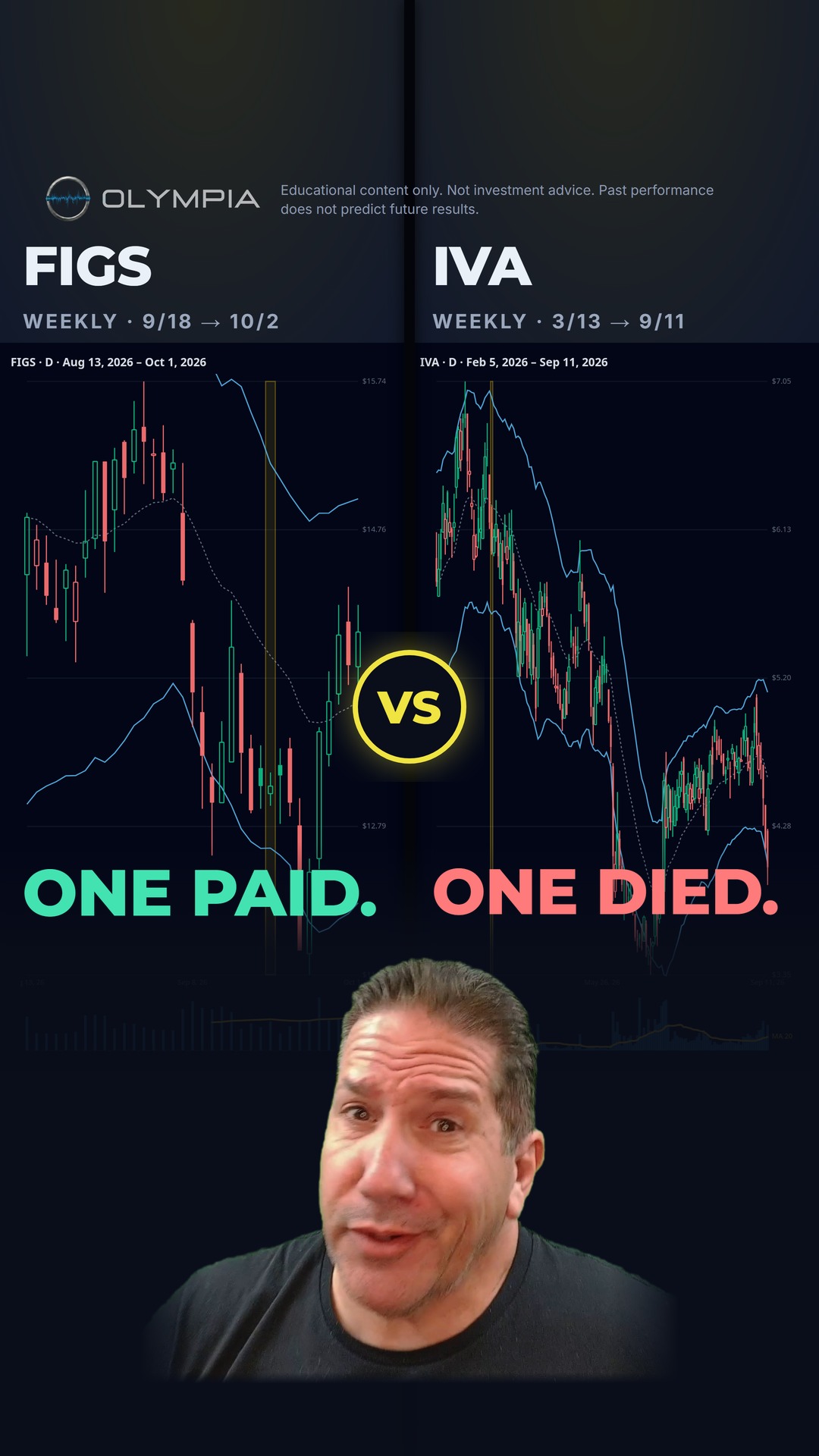
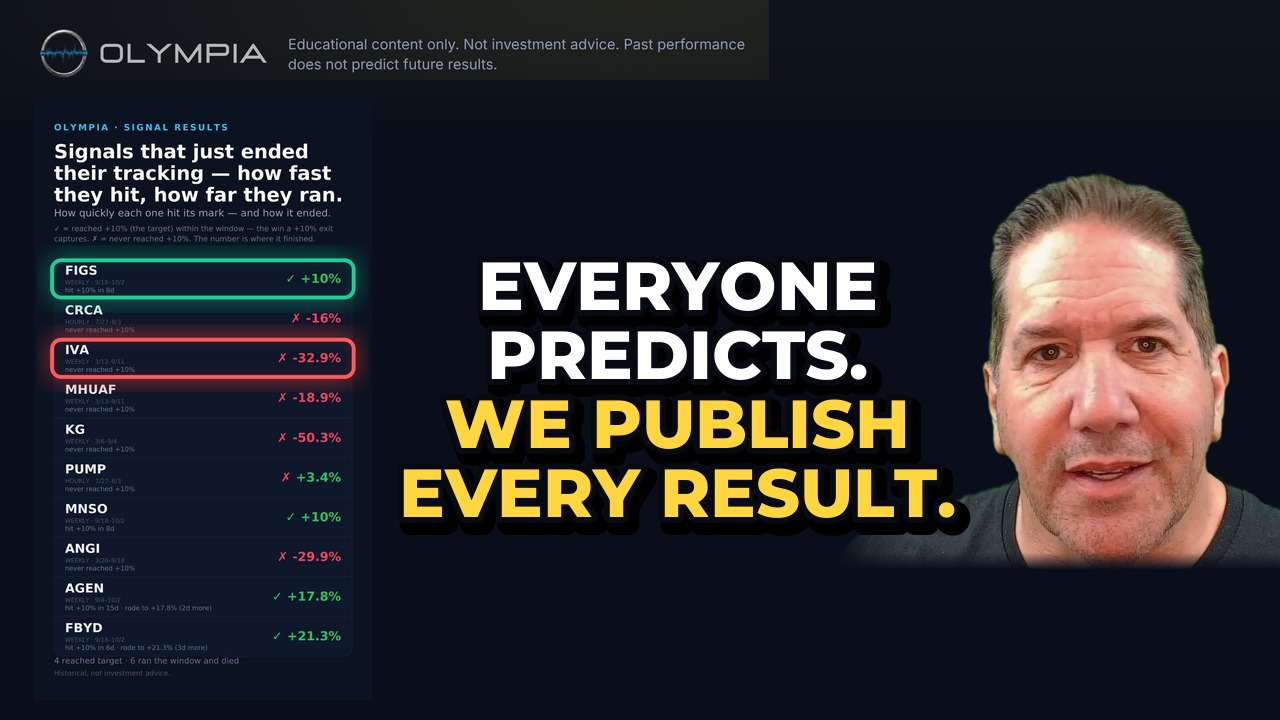
Here we've got two signals from Olympia. Both were swinging about five or six percent a day when they ended up on the board. At Olympia we study the losses harder than we study the victories, so we can show how to avoid or mitigate them.
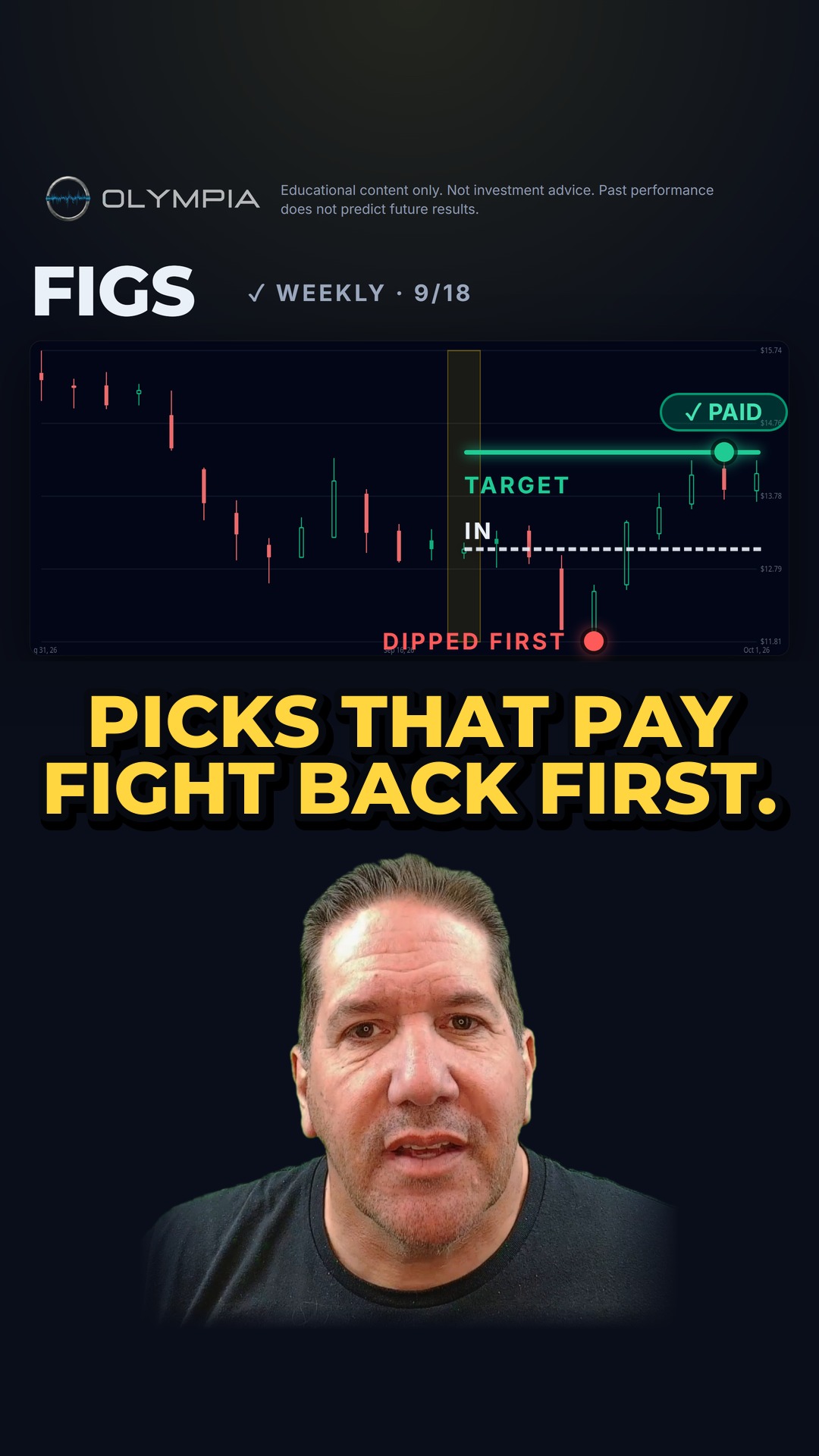
FIGS paid about 10% in eight trading days. IVA was up about 5% on its second day, then it turned and never paid; it finished about 33% down. At the start, these two looked the same.
What was yours to decide was the plan: where you're out, and what that costs. You can predict all you want. What you really need to do is decide before you click.
How it's worked out
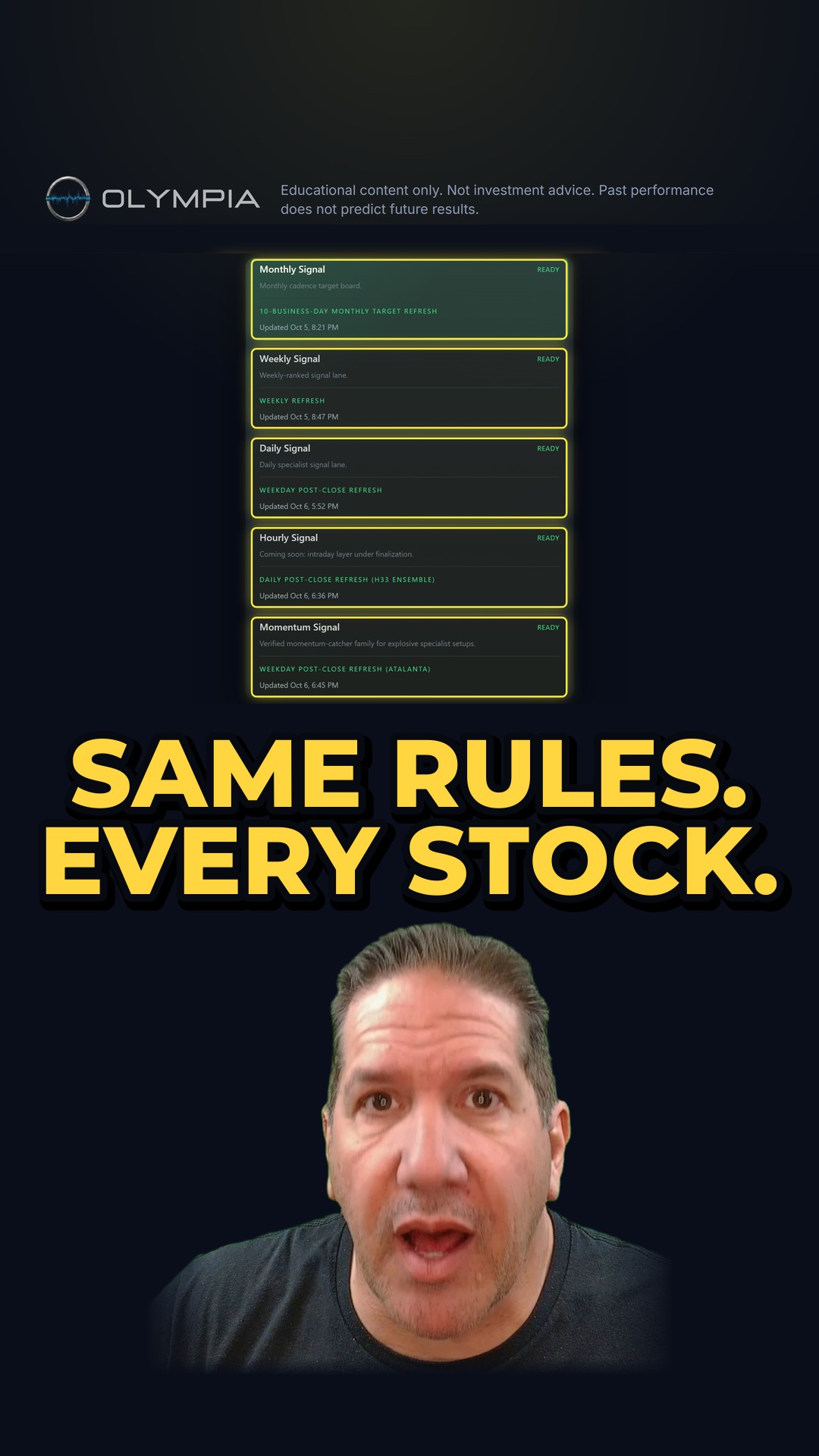
A scanner takes the thousands of stocks that are out there and helps you — because how long do you want to spend sifting through all of them? What it does is run the same rules over every stock, every time, and show you only the few that pass that filter.
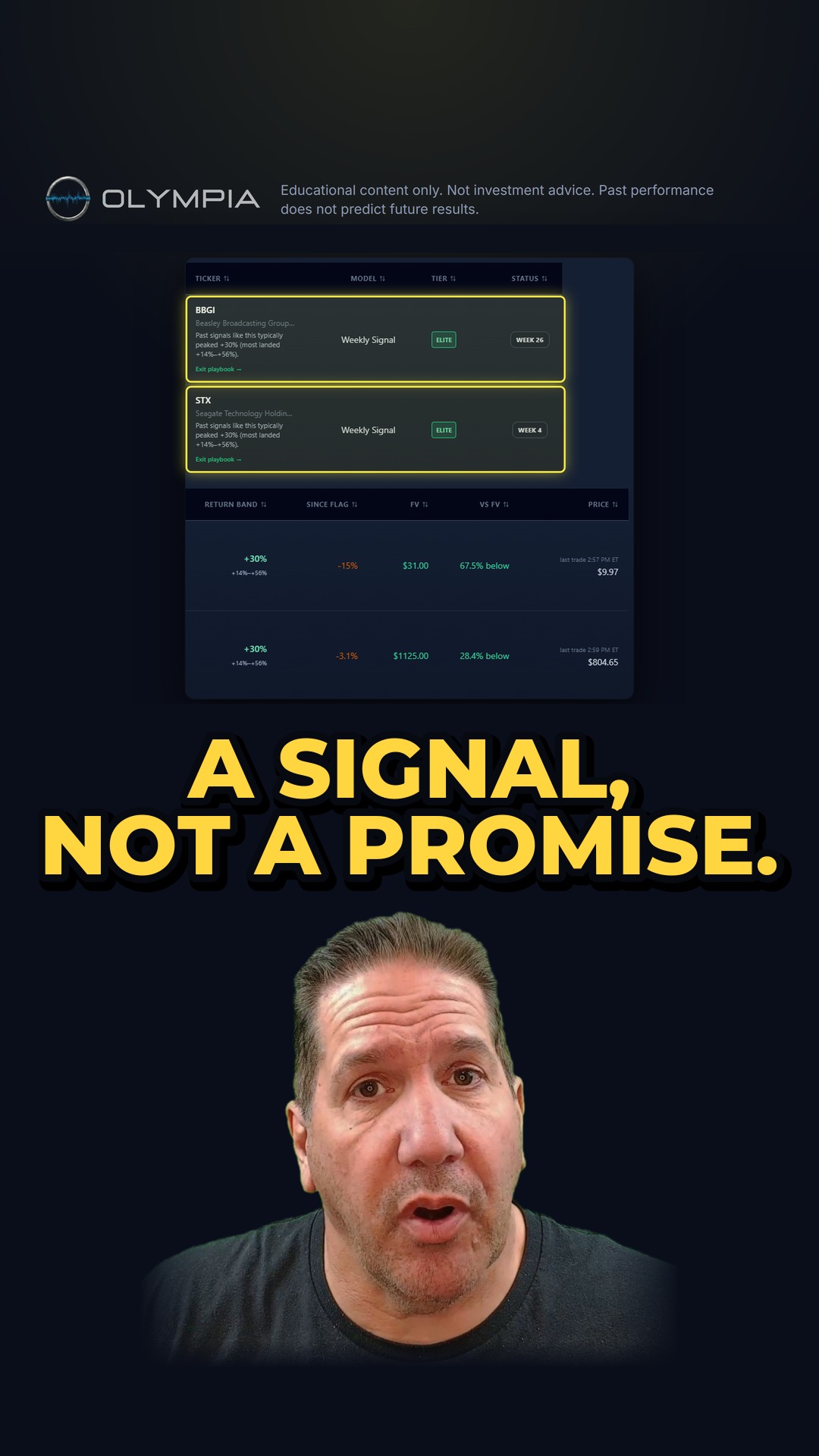
I don't have time to go through thousands of stocks one by one. So I built Olympia. The models go through them all and score them. On September 29th its board held 137 ELITE names: stocks that historically hit 10% in a certain timeframe, scored on how often and how precisely they hit it.
Each row shows the model that found it, its cadence — hourly, daily, weekly or monthly bars — what that bar measures, the tier, how far it's moved, and today's price.
What these models don't do, and nor does any scanner, is pick your winner. A row on the board is a signal. It's not a promise. There's no promise in trading, only research, plans and discipline. What a scanner will do is find the potential battles you might want to enter and win; it's your part to pick the ring where the fight takes place, and your part to research everything happening.
Practising it first
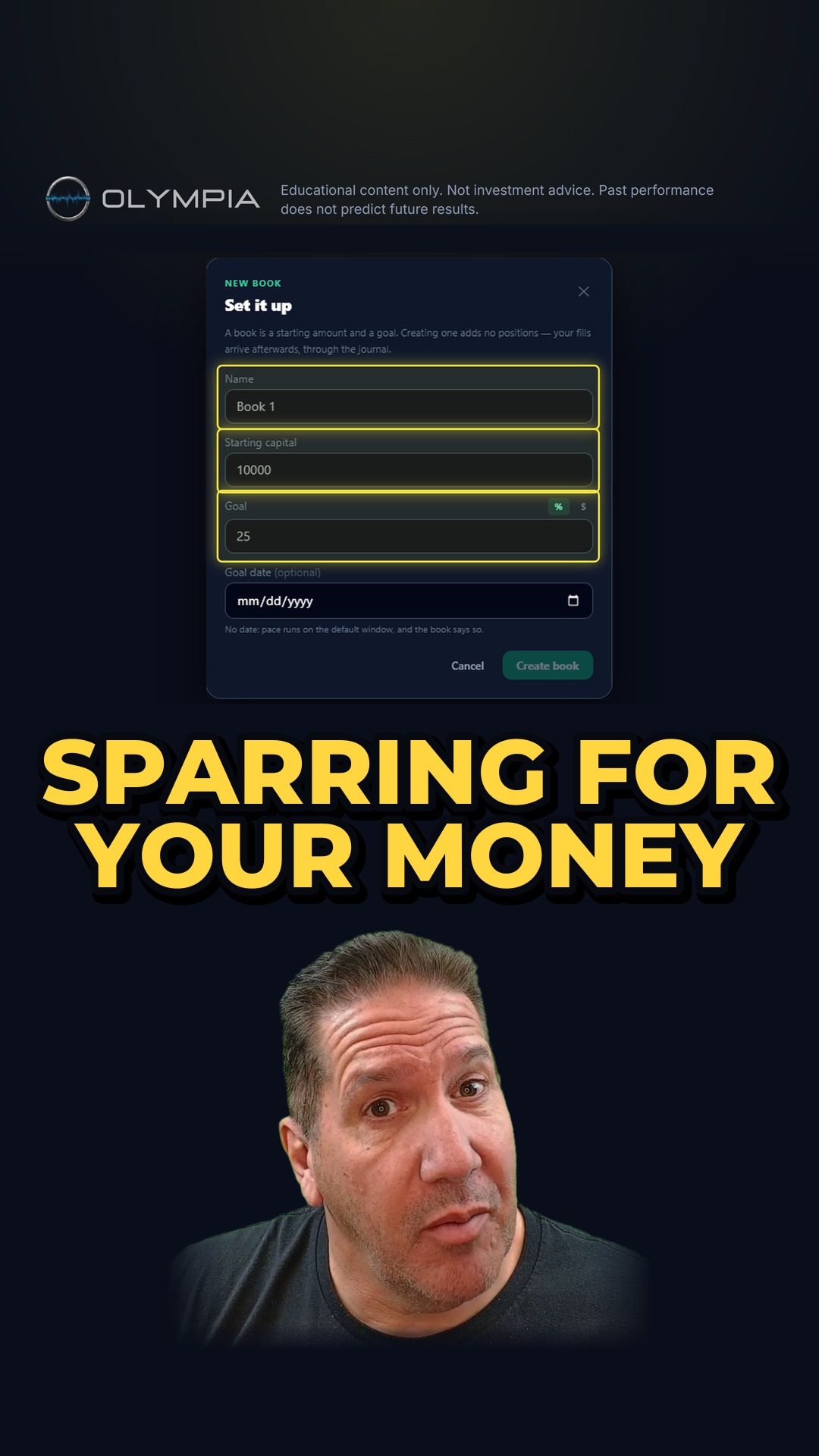
No matter where you're trading or what the fight is, you never want to go into a fight without testing yourself first. That's paper trading. It's sparring, for your money or for your strategy: trades taken on paper at real prices with nothing real on them.
Same rules as the real fight — the same stop, the same size, the same target. Change the rules and you're practicing some other kind of game.
What you need to do to become good at this is spar until the plan is boring. And it's not practice that makes perfect; it's perfect practice that makes perfect. A boring plan is a ready one.
Why it's worth doing
Why practise the decision instead of hunting the next big signal? Because even the picks that pay fight back first. You don't test yourself where the loss counts — you test yourself where you can make the fix before it actually costs you.
On our own signals, about one winner in four dipped 14% more before it paid. Without a plan, that dip feels like you're wrong, and you throw in the towel. With a plan it's a number you already decided when you were clear-headed and could stand it.
And when the signal you chose doesn't pay, the plan already set the price of being wrong: the stop you picked while you were calm. That winning signal gets the glory. The decision is what keeps you in the fight.
Where Olympia calculates it
The board is the scanner's output: every model's signals, each row carrying its cadence, its tier, how far it has moved and today's price.
Right where you log a trade, Olympia keeps your sizing rule on top — 1% of the account at risk — and warns you that changing it per trade stops it being a rule. The stop field carries its own menu, and the plan card lays out the entry zone, the target and the safety exit.
For practice, you can start a book of its own: a name, a starting amount, a goal. Log every trade into it the same as a real one. Olympia never places a trade for you. It keeps the score, shows you the strategy, and tells you what the book is worth and whether it's on pace.
And the Proof page tracks everything Olympia publishes forward — misses included, long after a signal hits or misses. We started tracking over a year ago.
FIGS (✓ Weekly, flagged 2026-09-18) and IVA (✗) are off Olympia's Death-of-a-Trade card, 2026-10-02 — every Weekly, Daily, Monthly and Hourly signal tracked for six months, misses included. The board count is as it read on 2026-09-29; a board's counts move day to day. The dip figure is Olympia's Weekly stop-width ladder: a tight stop at −14% kept 75 of every 100 winners, so about one in four dipped 14% or more before paying (the ALAB box, 2026-09-28). Measured and backward-looking, not a forecast.