The #1 reason traders blow up (it's not your picks)
Risk & sizing · July 21, 2026
Olympia publishes educational content for learning purposes only. Past performance is not indicative of future results. Nothing here is investment advice.

Why size, not stock picks, decides whether an account survives.
The lesson in writing
From the video, lightly edited for reading.
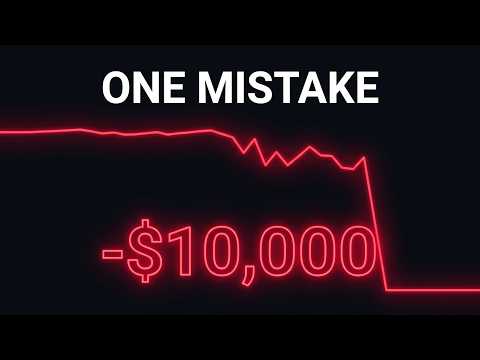
Size matters. A good month, then one big bet — and you gave it all back in a single afternoon. It wasn't the pick, it was the size. It's the most expensive mistake in trading, and the most fixable. Give me a few minutes and I'll show you how much to buy on every single trade.
How many times have you heard people say, “I'll throw in 5,000,” or “I'll grab 100 shares,” or “I love it — I'm going to go big”? None of them mention risk, and that's the whole problem.
Here's the reversal that changes everything: decide what you're willing to lose, not what you're willing to make. Professional traders pick one number first — risk a fixed 1% of the account on every single trade. Always start from the downside and work your way up. R represents risk. Your risk per share is simply entry minus stop, and we call it 1R. For example, buy at 50 with a stop at 47: that's $3 of risk per share, so 1R equals three bucks.
Here's the whole formula. The loss you're willing to take equals your account times your risk percentage, written as a decimal. The risk per share equals your entry minus your stop. Divide the first by the second, and you get how many shares to hold. With real numbers: a $10,000 account times 1% is $100 — what you're willing to lose on any one trade. Divide that by the $3 of risk per share and you get 33 shares. That's the point of the lesson: your size is the output of the math, not a guess. You chose the loss, and the math handed you a 33-share position of about $1,600.
A question people ask: a $3 stop on a $50 stock — isn't that 6%? Yes. But 1% of your account, $100, is the loss you chose; 6% is how far the stop sits below the stock's price. Two percentages, two different bases. Your account risk stays at 1%, so your stop, not your gut, sizes the trade. A tight stop of a dollar a share, and you hold 100 shares. A wide stop of $5, only 20. Both risk the same $100. The stop sets the size automatically.
Why so small? Survival. Ten losses in a row at 1% risk and you're down about 10% — a scratch. At 10% risk per trade, the same streak leaves you down about 65%. At 25%, you're down about 94%, and you're wiped out. Losing streaks aren't a maybe; they're a when. Sizing keeps you in the game.
One percent is the standard, but it's really a dial. Half a percent is capital preservation. One is conservative, two moderate, three aggressive, five very aggressive. There's no single right number, but the further you turn the dial, the less room you have to be wrong.
And here's why small losses matter: the hole isn't symmetrical. Down 10%, you need about 11% to get back. Down 25%, you need 33%. Down 50%, you need 100% — you have to double just to break even. Down 75%, you need 300%. The deeper the hole, the harder the climb out.
Size it to your level. If you're a beginner, one rule every time: risk 1%, no exceptions. If you're a novice, size to volatility — set the stop by ATR, so calm stocks earn more shares and wild ones fewer. If you're advanced, manage the total heat: cap the risk across everything you hold at once, and watch correlation. Same formula underneath, just more finesse.
Three things to remember. One: pick the loss you're willing to take, before you pick what you're willing to win. Two: let the stop set the size, not you. Three: cap your total heat across all your positions. Do just that and you're ahead of most people trading real money. The bottom line: risk decides the size, and size decides survival. You never pick the position size — you pick the loss you're willing to accept, and the math does the rest.