The 3 things quietly draining your trading account
Risk & sizing · August 4, 2026
Olympia publishes educational content for learning purposes only. Past performance is not indicative of future results. Nothing here is investment advice.
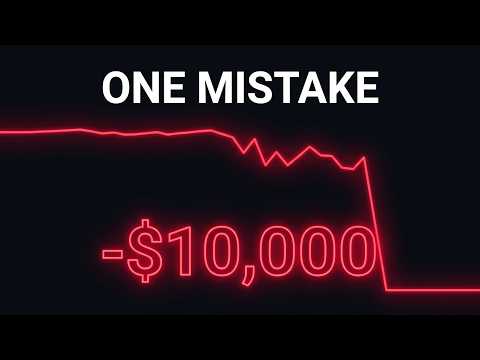
You can be right about the company, right about the direction, and still lose money. Three quiet account-drainers, walked through on a real historical chart: oversized positions, no stop (or a random one), and hoping a loser eventually comes back.
The lesson in writing
From the video, lightly edited for reading.
Hey, it's Mike from Olympia, with a lesson on why you keep losing money. This one might sting a little, so stay with me — it's the one that changes everything. Here's the hardest truth in trading: you can be completely right about a stock and still lose money on it. Right about the company, right about the direction, and your account still shrinks. When that keeps happening, you start tinkering with your picks — a new screener, a new strategy, a new guru. But it's almost never the pick. Three things quietly drain your account, and not one of them is the stock you chose.
Here's FormFactor — a real name, and a perfectly reasonable thing to be interested in — and it still bled from around $160 down to around $84. So picture it: you were right. You liked the company. You had a thesis. And it didn't matter one bit. Being right about a business does not protect your account. What decides whether you keep your money is what you do around the trade — the stuff that has nothing to do with the pick.
So if it's not the pick, what is it? Three killers. Size: the position's just too big. No stop: no line in the sand, or some random one set in hope. And hope itself: the strategy where you just wait for it to come back. Every blown-up account you've ever heard of is some blend of these three. Learn to see them and you've already fixed most of the problem.
Killer number one: the size is too big. You loved an idea, so you went heavy and dropped a big chunk of your account on your best guess. Here's the math nobody wants to hear: one oversized loss undoes ten good trades. You can pick great all year and still blow up purely on one size being wrong. Sizing isn't the last thing you think about — it's the first. It's survival.
Killer number two: no stop, or just some random stop. Watch FormFactor grind from $168 down to $85. Every single candle on the way down was a choice — a choice to keep holding. You just didn't feel it as a choice, because you never decided the exit. A stop is a line in the sand you set before you're in, in cold blood, so the ride down stops being optional. No line, and gravity makes the decision for you, all the way to the bottom.
Killer number three: hope. FormFactor just kept sliding, down around $91, and the whole way down the voice says, “It'll come back. Just give it a little time.” That's not a plan. That's a feeling wearing a plan's clothing. That's exactly how a small, manageable loss turns into the big one that actually hurts. Hope is a wonderful thing in life. In a trade, it's the most expensive word there is.
Ever play poker? Everybody's got a tell. Here's the tell for this one: you know you're in real trouble when you don't even want to open up the position. You avoid the screen because you don't want to see the red. That little flinch — “I'll check it later, maybe it came back” — is the signal. It means you skipped the plan, and some part of you already knows it. Honestly, the flinch is a gift: it points straight at where you went wrong, while there's still time to fix it.
The fix is just a little math. Decide what you're willing to lose — what you're willing to gain comes after. Never risk more than 1 or 2% of your total account on any one trade. Determine your stop before you do anything else. Work these out and have them down on paper, then enter the trade.
So, the three things to take from this lesson: you'll lose on the size, you'll lose on the stop, and you'll lose on the hope — when you don't decide them before the trade. Stop tinkering with what you're buying and start fixing what you do around it. Decide the loss before the trade, every single time, and those three killers can't get their hooks in you. Even a great system has losing trades. The difference is that a pro's losses are small and planned, and an amateur's are the ones that end the account.