Sizing to conviction — bigger on the better record, never past the cap
Short · Risk & sizing · October 7, 2026
Olympia publishes educational content for learning purposes only. Past performance is not indicative of future results. Nothing here is investment advice.

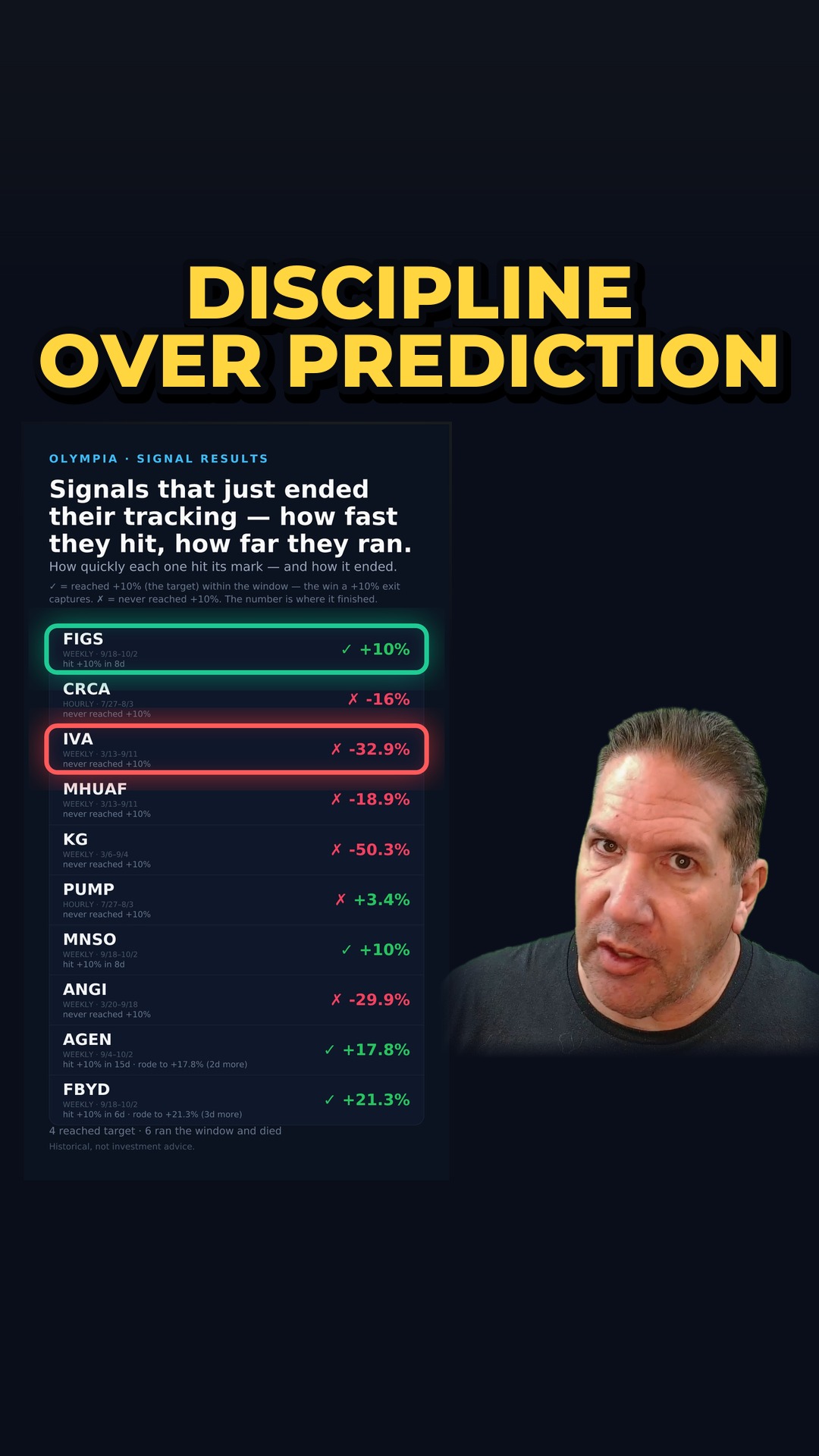
More on the better record, less on the weaker. Olympia sizes from its own record of that kind of signal — how often it paid, what it made, what it lost and how long it took — then takes a slice of it. Conviction picks the size; the cap picks the ceiling.
Part of the full lesson: How much should I risk across all my trades? Portfolio heat
The lesson in writing
All excited to bet big on your best idea? Only up to the cap. Don't go over the cap.
What it is
Sizing to conviction is more on the better record, less on the weaker.
Conviction picks the size. The cap picks the ceiling.
Where Olympia calculates it
Olympia sizes each trade it suggests from your book out of its record for that kind of signal: how often it paid, what it made, what it lost, and how long it took to get there.
It uses a combination of Kelly sizing — Kelly maths — and correlation matching: the size that grows money fastest on those odds. Then it takes a slice of that: a quarter on steady, half on balanced, three quarters on full.
Then the cap wins. Whatever the maths asks, no name goes past 8% of the book on the steady pace. And it never sizes up on a loss to try to win it back.
Where the cap itself comes from is in How much should I risk across all my trades? Portfolio heat.
The Kelly fractions and the per-name caps are the window's own settings; the record they size from is Olympia's own, by kind of signal. Measured and backward-looking, not a forecast.