What a trailing stop is — and what it costs you
Short · Exits & selling · October 7, 2026
Olympia publishes educational content for learning purposes only. Past performance is not indicative of future results. Nothing here is investment advice.
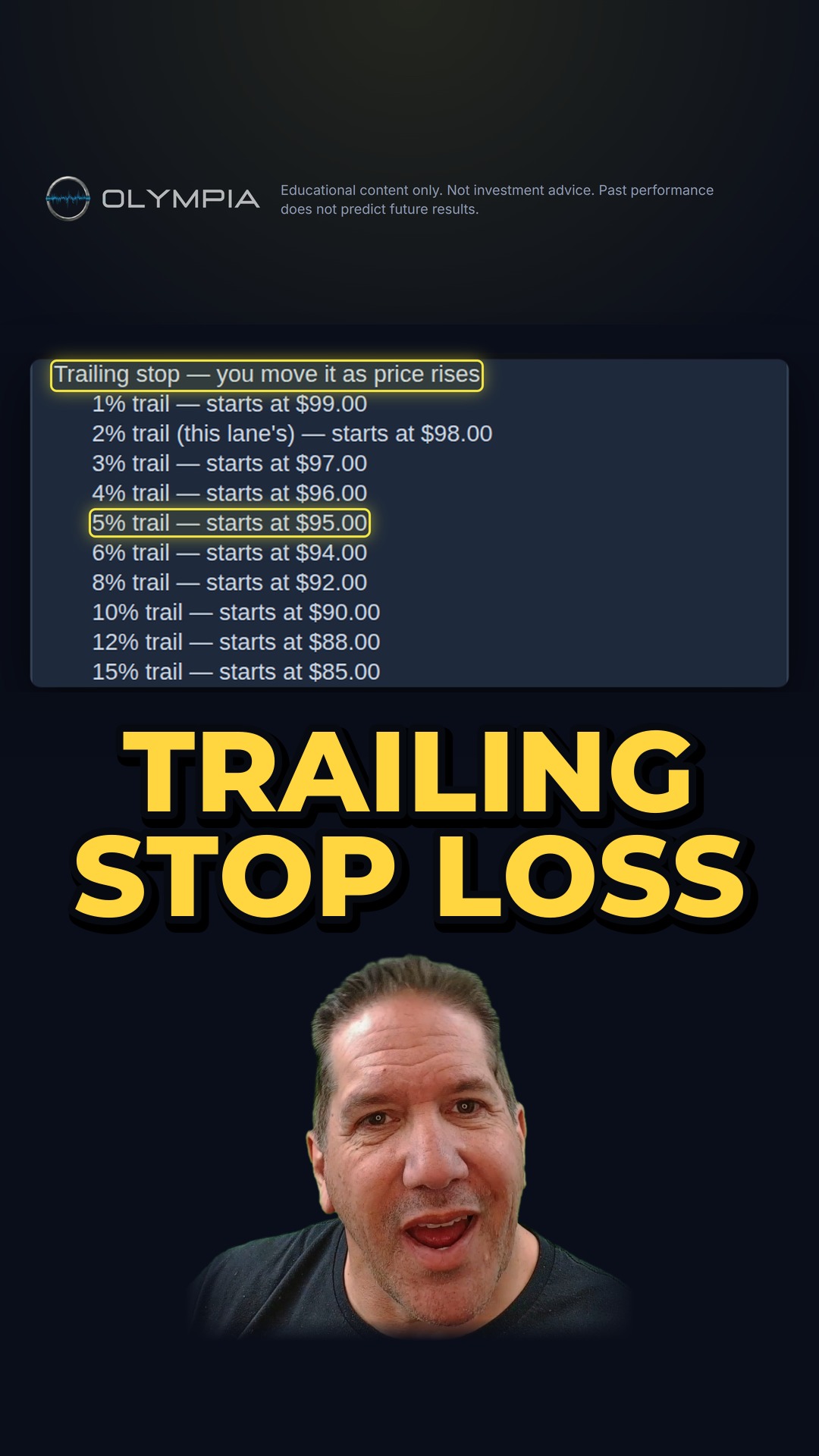
You went to sleep up 20% and woke up with 5%. A trailing stop rides at a set percentage under the highest price since you bought, and it never moves down: a 5% trail, in at $100, starts at $95 and is $114 by the time the price is $120.
Part of the full lesson: Stop loss or trailing stop? Which one, and where it goes
The lesson in writing
You set your stop loss and you go to sleep feeling happy and safe. Your money's protected — you think your profit's protected too.
But you wake up. You were up 20% when you went to sleep. The stock sold, and you only got 5% on your money.
What it is
The trailing stop loss rides at a set percentage under the highest price since you bought it. It never moves down. You can also set a trailing stop that has a price that never moves.
How it's worked out
So let's say you set a 5% trail. You're in at $100 and it starts at $95. At $120 it's $114 — it goes up as the price goes up.
Where Olympia calculates it
In Olympia you enter the price you got in at. Once that price is in, Olympia calculates your trailing stops and lets you know what to set it at: what the best percentage is, how far to trail by, and what you're going to end up with.
When the trail should start — and what starting it on day one costs — is in Stop loss or trailing stop? Which one, and where it goes.
Example numbers, not a member's: a 5% trail from a $100 entry. The prices are arithmetic on that input.