A stop just under support — let the floor do the work
Short · Exits & selling · October 7, 2026
Olympia publishes educational content for learning purposes only. Past performance is not indicative of future results. Nothing here is investment advice.
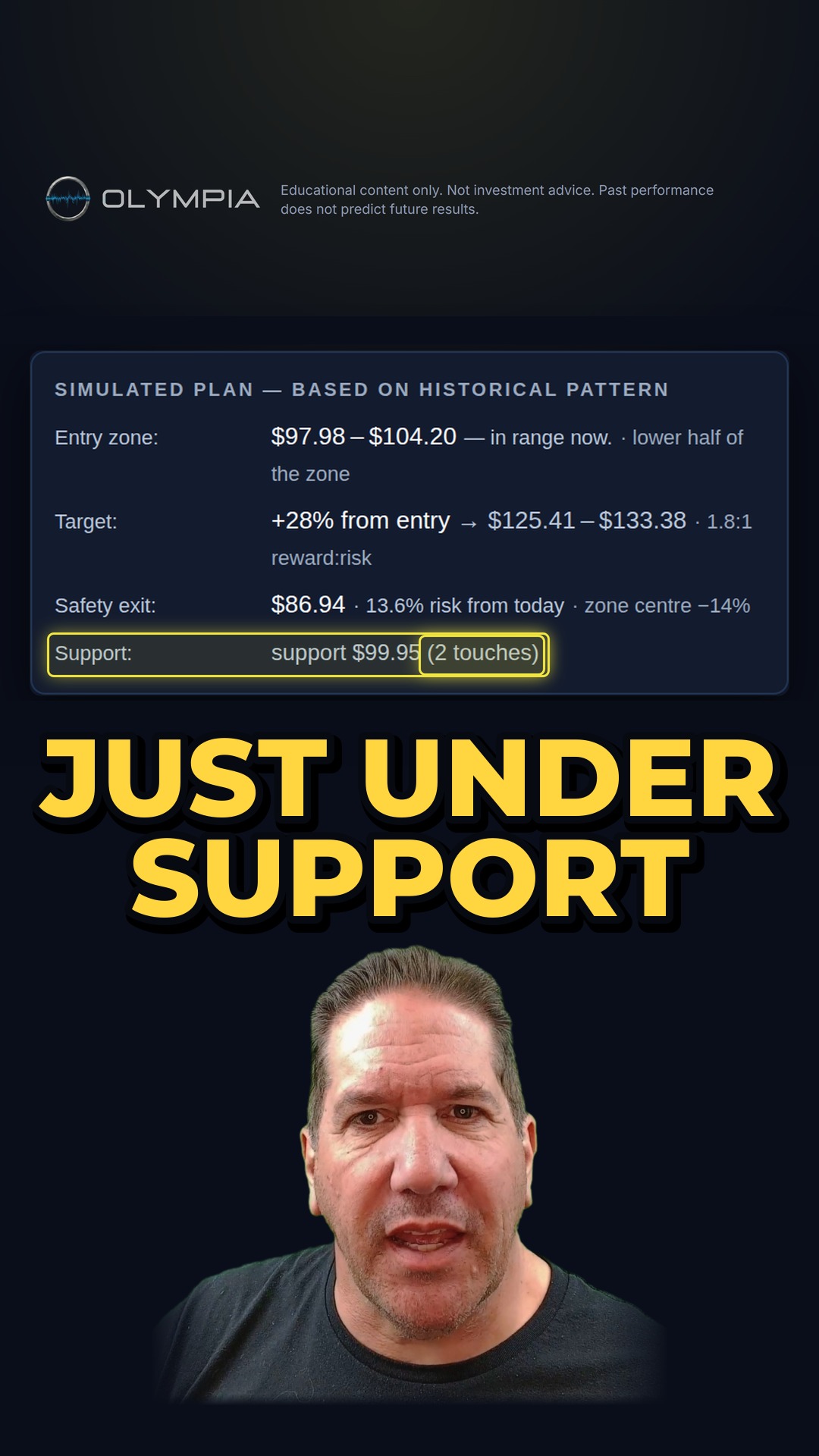
Support is a price the stock has bounced off before, where buyers stepped in at least twice. A stop just under it means the price has to break that floor to throw you out; the wiggles above it don't. On the record it kept about 80 of every 100 weekly winners — but only about 55 monthly ones.
Part of the full lesson: Stop loss or trailing stop? Which one, and where it goes
The lesson in writing
Stop loss just under support: stopped out by a penny, and then it bounced right back above your target.
What it is
Support is a price the stock has bounced off before, where buyers stepped in at least twice.
A stop just under it means the price has to break that floor to throw you out. The wiggles and movement just above it — they don't.
How it's worked out
The record that we keep shows a stop just under the nearest support kept about 80 of every 100 weekly winners, but only about 55 monthly ones. For a trade that long, the nearest floor sits too close.
That's the idea: the market has to break the floor before it takes you out.
Where Olympia calculates it
Olympia finds the nearest one for you, under structure on the stop menu — just under support, with its price and how many touches. Fewer than two touches and it doesn't call it a floor; it won't show one.
The measured ladder, for when there is no floor close enough, is in Stop loss or trailing stop? Which one, and where it goes.
The kept counts are Olympia's own measured record for weekly and monthly signals that went on to pay, misses included. Measured and backward-looking, not a forecast.