Why a stop needs a menu, not one rule
Short · Exits & selling · October 7, 2026
Olympia publishes educational content for learning purposes only. Past performance is not indicative of future results. Nothing here is investment advice.
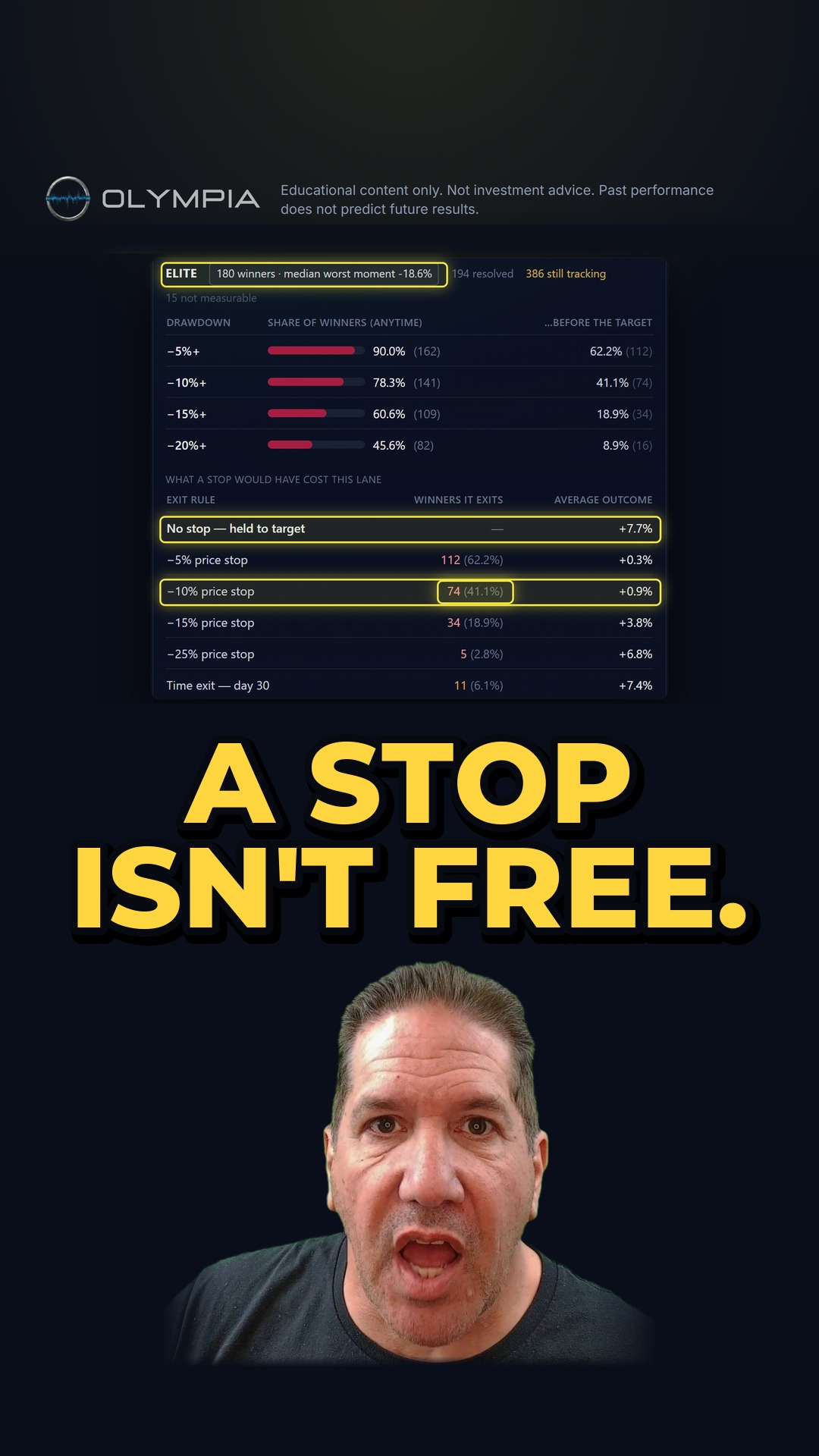
The usual picks cost more than they look. On our top-tier daily signals a flat 10% stop would have thrown out about 40 of every 100 that went on to pay, and no stop at all leaves nothing between you and the one that never comes back. A stop isn't free — you're picking it with the price tag showing.
Part of the full lesson: Stop loss or trailing stop? Which one, and where it goes
The lesson in writing
So why not just pick one stop and be done with it? Because the usual picks cost more than they look.
How it's worked out
On our top-tier daily signals, a flat 10% stop would have thrown out about 40 of every 100 that went on to pay.
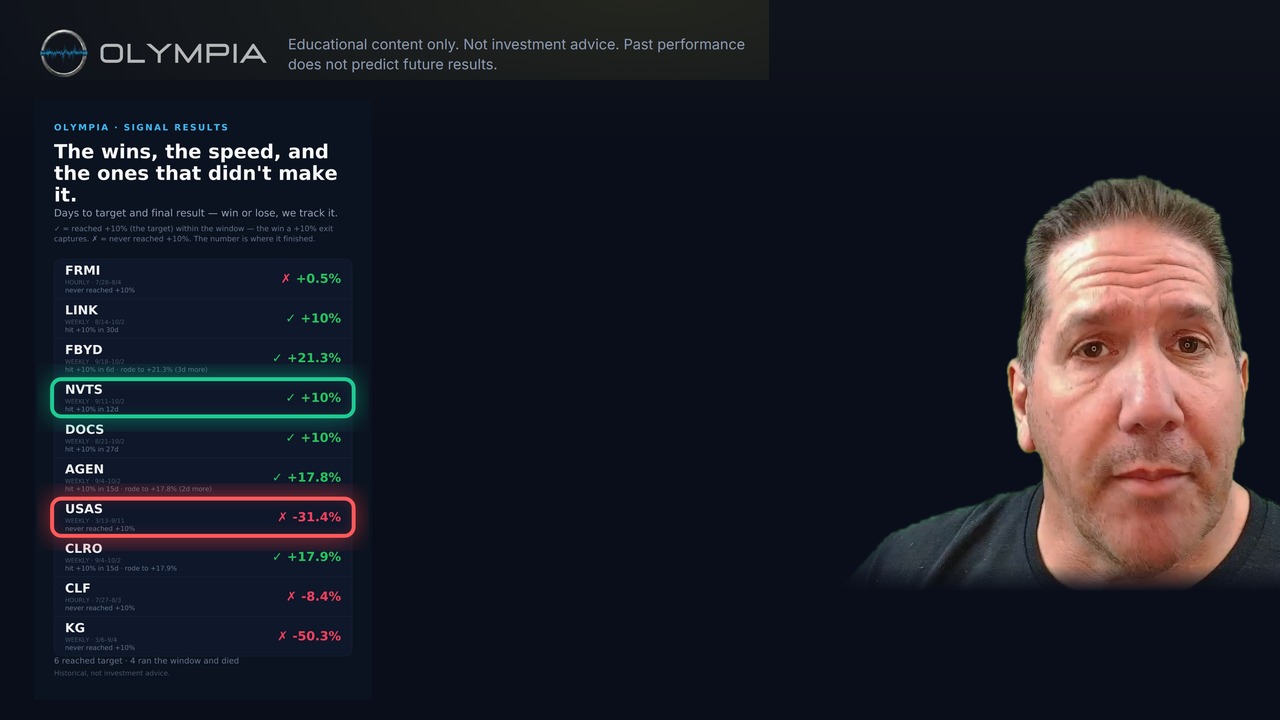
And no stop at all leaves nothing between you and the one that never comes back.
Why it's worth doing
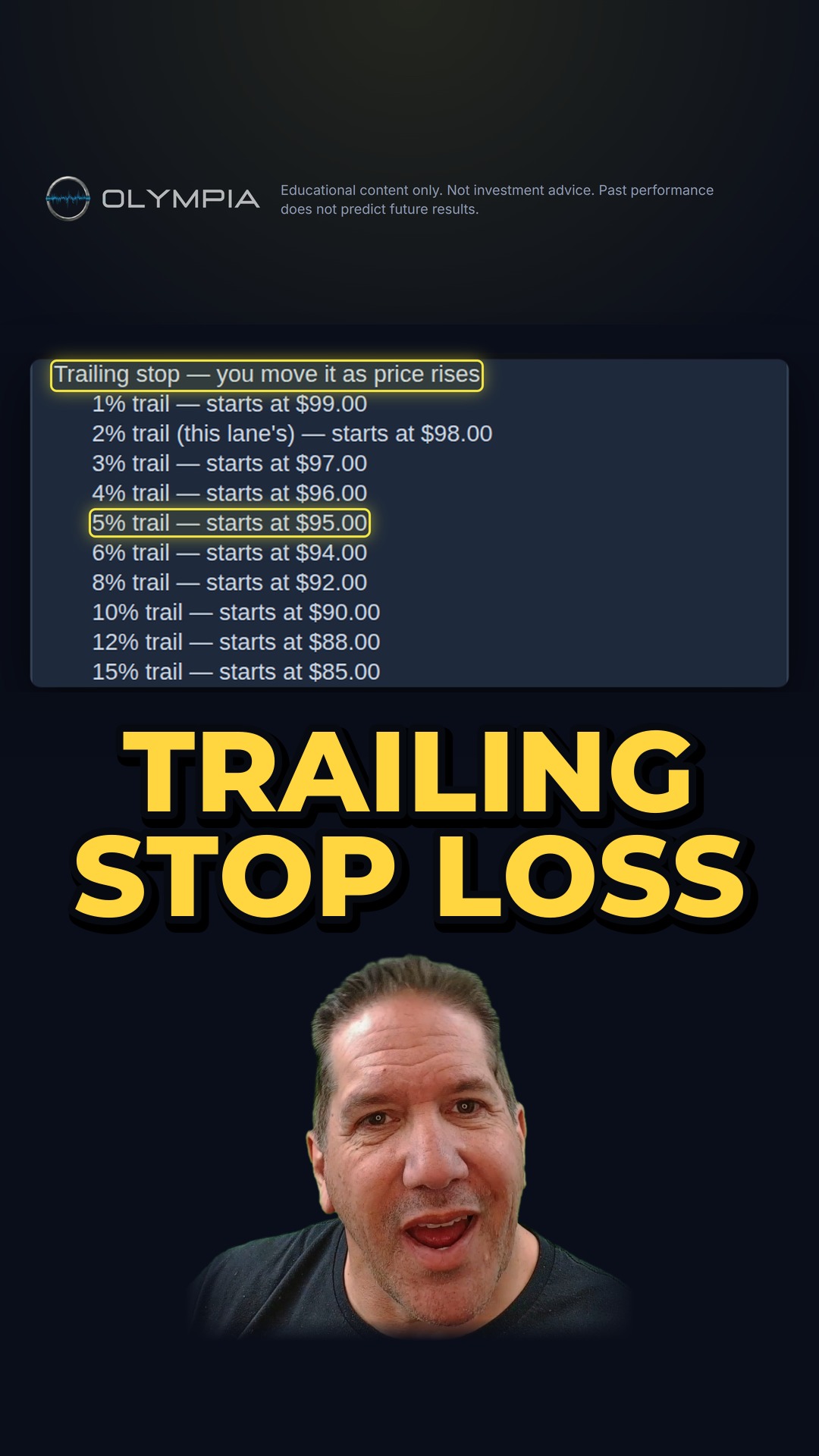
Olympia's stop menu is the middle ground: its measured stops show what each one cost before you pick — how many winners each one kept.
A stop isn't free. Even a measured one throws out some winners. What it buys is a way out of the trade that keeps falling. So you're picking your stop with the price tag showing.
The rungs themselves, with their prices and their counts, are in Stop loss or trailing stop? Which one, and where it goes.
The flat-10% figure is Olympia's own measured record for top-tier daily signals that went on to pay, misses included. Measured and backward-looking, not a forecast.